
About Nova Scotia
Nova Scotia is a small Canadian province on the Atlantic coast with a big personality. With 13,300 kms of coastline and the highest tides in the world, every aspect of life in the province is shaped by the ocean and beautiful maritime landscape. Fresh water lakes, large tracts of forests, and pristine wilderness dominate the rural landscape. Nova Scotia’s economy is still deeply entwined with the traditional industries of farming, fishing, and mining.
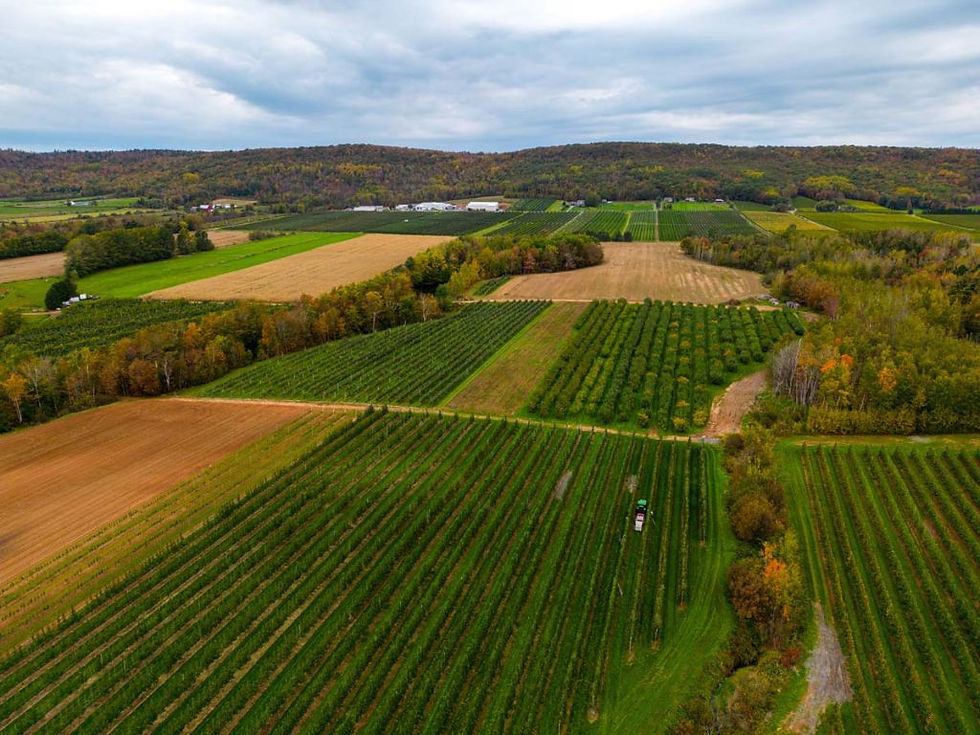
The primary agricultural region in Nova Scotia is in the Annapolis Valley, which houses all the major apple orchard businesses in the province. The Annapolis Valley is 150 kilometres long, and comprises the North and South Mountains, running parallel to the Bay of Fundy which has the highest tides in the world. This unique microclimate is perfect for growing apples, and these climatic conditions give growers a competitive advantage over most places when it comes to growing high quality fruit.

400 Years of Apple Growing
Apples have been grown in Nova Scotia since the settlement of North America, with the first plantings by French settlers in the early 1600’s. From the 1860’s until World War II, apples were an export staple of Nova Scotia to Britain, however after the war Britain established its own apple industry and this market declined significantly. After a period of serious decline, by the 1980s the industry was in trouble. In the 1990’s the fate of the industry began to turnaround as a new industry focused on taste and modern planting methods arose. At the same time, the Honeycrisp was introduced to the Nova Scotia landscape and the rest is history.